
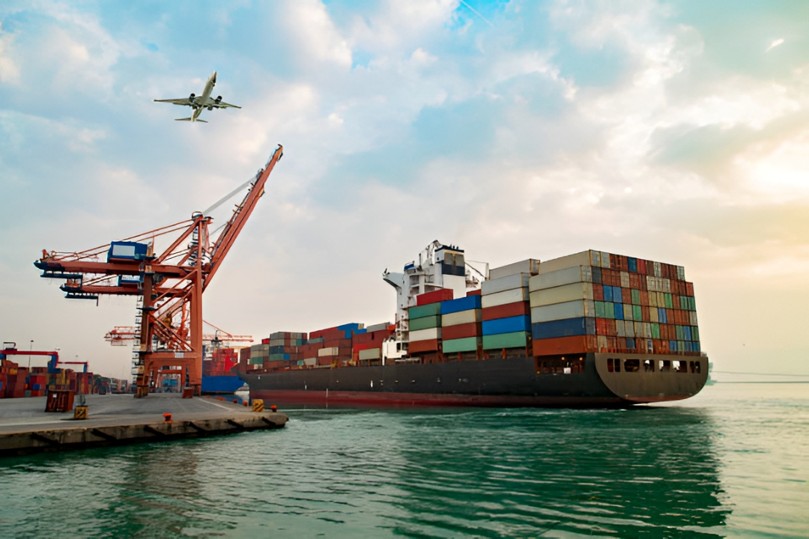
Choosing between sea and air freight often comes down to one question: what matters more right now, cost or speed? At Emerald Global Logistic, we help Melbourne businesses weigh up that trade off every week. Neither option is universally better, the right choice depends on cargo type, budget, and how soon it needs to arrive. Here’s how the two genuinely compare.
Key Takeaways
- Sea freight suits large, heavy, non urgent cargo.
- Air freight costs more but moves dramatically faster.
- Most Australian imports by weight travel by sea.
- Cargo value and urgency should drive the decision.
- Combining both modes can balance cost and speed.
Why Sea Freight Still Dominates Australian Trade
Sea freight remains the backbone of Australian trade by a wide margin. BITRE’s Australian Sea Freight report shows the value of Australia’s international sea freight imports and exports continues to run into the hundreds of billions of dollars each year, reflecting just how central shipping remains to the national economy. For bulky, heavy, or non urgent cargo, sea freight remains the default choice for good reason, it’s simply the most cost effective way to move large volumes across long distances. Container shipping also offers flexibility for businesses moving everything from full container loads (FCL) to less than container loads (LCL), making sea freight suitable for companies of varying shipment sizes.
Where Air Freight Genuinely Earns Its Cost
Air freight earns its higher price tag when time is the priority. Perishable goods, urgent replacement parts, and high value items that can’t afford weeks in transit are where air freight genuinely justifies the cost difference. A peer-reviewed freight mode choice study focused on the Australian domestic market found that shippers weigh price, transit time, reliability, and frequency very differently depending on cargo type, confirming that the sea versus air decision rarely comes down to cost alone.
Cost: The Real Numbers Behind the Decision
The price gap between the two modes is significant, and it’s worth understanding why. Sea freight charges are generally based on container volume or weight, spread across a large shipment, which keeps the per unit cost low. Air freight is billed by chargeable weight, a calculation that factors in both actual weight and volume, which is why bulky but light cargo can cost surprisingly more to fly than its weight alone suggests. Additional costs such as customs clearance, port charges, terminal handling fees, and local delivery should also be factored into the overall freight budget when comparing shipping options.
Speed and Reliability Trade-Offs
Transit times tell a different story. A sea shipment from Asia to Australia typically takes several weeks, while the same cargo by air can arrive within days. Reliability matters just as much as raw speed though, ocean schedules can shift with port congestion or vessel availability, while air freight is more exposed to route disruptions and capacity constraints during peak periods. Neither mode is immune to delay, but the scale of disruption tends to differ considerably. Careful planning, realistic delivery expectations, and maintaining safety stock can help businesses minimise the impact of unexpected shipping delays, regardless of whether cargo travels by sea or air.
Cargo Type Matters More Than People Think
Cargo characteristics often decide the question before cost or speed even enter the conversation. Heavy machinery, furniture, and bulk goods rarely make economic sense by air, while fresh produce, pharmaceuticals, and urgent documents rarely make sense by sea. GS1 Australia’s overview of the freight and logistics sector notes that freight and logistics contributes 8.6 percent to Australia’s GDP, spanning road, rail, sea, and air modes working together rather than in isolation, a reminder that most supply chains genuinely use both.
Environmental Considerations
Environmental impact is increasingly part of the freight conversation too. Sea freight produces significantly lower emissions per tonne of cargo moved compared to air freight, which burns considerably more fuel relative to the weight it carries. Daily Cargo News’ coverage of the Australian maritime and logistics industry regularly reports on exactly these kinds of sustainability pressures reshaping shipping decisions. For businesses factoring sustainability into procurement, this difference is worth weighing alongside cost and speed, particularly for non urgent shipments where the emissions trade off is avoidable.
Making the Right Call for Your Shipment
Many businesses land on a hybrid approach rather than choosing one mode exclusively. Bulk stock might travel by sea on a predictable schedule, while urgent top up orders move by air when a customer can’t wait. Smaller operators can balance both modes without blowing the budget. Our Services at Emerald Global Logistic runs through the full range of freight options we manage for Melbourne businesses. For greater visibility throughout the shipping process, businesses can also use track container shipment service to monitor cargo progress and stay informed about delivery milestones.
A few questions worth asking before choosing a mode:
- How urgently does this cargo need to arrive?
- Is the shipment heavy, bulky, or relatively compact?
- Does the cargo value justify air freight’s higher cost?
- Could a hybrid approach balance cost and speed better?
- Are there perishability or shelf life factors to consider?
Conclusion
Sea and air freight both have a genuine place in Australian trade, the right choice depends on your cargo, your timeline, and your budget. Understanding the real trade offs, rather than defaulting to habit, leads to smarter shipping decisions. Not sure which mode suits your next shipment? Get in touch with our team and we’ll help you find the right fit.
FAQs:
Is sea freight cheaper than air freight?
Generally yes, sea freight costs significantly less per unit, especially for large or heavy shipments.
How much faster is air freight than sea freight?
Air freight typically takes days, while sea freight from Asia to Australia often takes several weeks.
What cargo is best suited to air freight?
Perishable goods, urgent parts, and high value, time sensitive items generally suit air freight best.
Does Australia rely more on sea or air freight?
Sea freight carries the vast majority of Australia’s import and export volume by weight and value.
Can businesses combine sea and air freight?
Yes, many businesses use sea freight for bulk stock and air freight for urgent top ups.
Is air freight worse for the environment than sea freight?
Generally yes, air freight produces significantly higher emissions per tonne of cargo than sea freight.